Form 26AS is a consolidated annual statement maintained by the Income Tax Department. It contains details about the tax deducted at source (TDS) or TCS on a taxpayer's income. the tax credit information.
If you have paid any tax on your income or tax has been deducted from it, then the Income Tax Department has these details in their Form 26AS database. If you have paid more tax than required, you can claim a refund by filing the ITR.
For NRIs, if they earn any income in India, such as Interest on an NRO account or any salary income and TDS has been deducted from it, then to claim the tax credit and view Form 26AS, one has to register under the Income Tax Department and should have PAN. Note: The new structure will contain the details of all the financial transactions and provide information about the specified financial transaction (SFT) and pending tax proceedings.
- Information about Tax Deducted at Source by deductors like employers/contractors; [TDS]
- Information about Tax Collected at Source by collectors; [TCS]
- Advance tax/self-assessment tax paid by the assessee;
- Regular assessment tax is deducted by taxpayers.
- Details of tax refund (if any) made by the department during the last financial year and
- Details of TDS defaults made during the year (after processing the TDS return).
- Specified Financial Transactions(SFT) details, mostly high-value transactions regarding shares, mutual funds, etc.
- Interest received from bank & others without deducting TDS in case of Form 15G/H.
- Tax deducted on selling immovable property
- Pending and completed income tax proceedings.
- Details of turnover as per GSTR 3b
- Foreign remittance information reported in Form 15CC
- Information from Annexure-II of the last quarter's Form 24Q related to TDS on salary
- Information from other taxpayers' ITRs.
- Interest on a refund of income tax.
- Information on Form 61/61A that could be used to populate the PAN.
- Depository/Registrar and Transfer Agent report off-market transactions.
- The Registrar and Transfer Agent report information on mutual fund dividends.
- The Registrar and Transfer Agent report mutual fund purchases (RTA) information.

Form 26AS plays a crucial role in tax planning and maintaining compliance in addition to being a statement of TDS deducted. Here’s how you can use Form 26AS for tax planning and compliance -
- Regular Review: Check your Form 26AS regularly to ensure it aligns with your income sources and deductions.
- Resolve Discrepancies: If you find any mismatches, promptly contact the deductor or Income Tax Department for rectification. This helps prevent potential tax notices or penalties.
- Accurate Reporting: Accurately declare all income reflected in your Form 26AS while filing your income tax returns to claim correct tax credits and avoid additional tax liabilities.
- Reconcile Deductions: Verify that eligible deductions (e.g., donations, investments under Section 80C to 80U) are correctly reflected in your Form 26AS. If not, contact the relevant entities for updates.
- Track Refunds/Demands: Use your Form 26AS to monitor the status of tax refunds or demands, including assessment year, amount, and payment mode.
Tax planning is an essential part of every individual’s financial journey. Need help planning your taxes and want to maximize your tax savings? Hire an Online CA Now!
With the ITR filing for FY 2025-26 started, you will need to download the Form 26AS for filing your ITR. However, many people face certain issues while accessing Form 26AS. Some of the major problems faced by them are given below -
- Mismatch in TDS Information: Sometimes, there can be a mismatch between the TDS shown in Form 26AS and the actual amount that has been deducted from your income. This mismatch can take place when the deductor either does not deposit the amount or makes a mistake while reporting it to the Income Tax Department. In such cases, you can contact the deductor to correct the error.
- Non-Availability of Net Banking Option: Not all banks allow you to view Form 26AS using their net banking facility. If your bank does not allow the same, you will have to view the Form 26AS through the Income Tax Department’s e-filing website.
- Technical Glitches: Another major issue with accessing Form 26AS is that it may go down or crash during peak hours of filing. So, if you try to access it at the last minute, you might experience difficulty and failures due to technical glitches. Therefore, it is better to download your Form 26AS now and make sure you file your ITR on time.
Form 26AS is divided into the following 10 parts -
Part I – Details of Tax Deducted at Source (TDS)
This section shows the tax deducted from various types of income, such as salary, professional receipts, business income, interest earned on deposits, and other payments on which TDS is applicable.
Part II – TDS Details Where Form 15G/15H Was Submitted
If you have submitted Form 15G or Form 15H to avoid TDS because your income is below the taxable limit, the related transactions are displayed here.
Part III – Transactions Covered Under Sections 194B, 194R, and 194S
This part contains details of tax deducted when benefits or rewards are provided in kind. Examples include prizes won through lotteries, sponsored foreign trips, gifts, incentives, or certain transactions involving virtual digital assets.
Part IV – TDS Deducted Under Sections 194IA, 194IB, 194M, and 194S (For Recipients)
This section reflects tax deducted on payments received by:
- Sellers of immovable property
- Landlords receiving specified rent payments
- Contractors and professionals receiving payments above prescribed limits
- Sellers of virtual digital assets such as cryptocurrencies
Part V – Transactions Reported Through Form 26QE (For Sellers of Virtual Digital Assets)
Details of tax deducted on the sale of virtual digital assets and reported through Form 26QE are available in this section.
Part VI – Details of Tax Collected at Source (TCS)
This part shows tax collected at source under various provisions of Section 206C. Common examples include TCS on foreign remittances, overseas tour packages, and the sale of specified goods.
Part VII – Income Tax Refund Details
Any tax refund issued to you and processed through the TDS Central Processing Cell (CPC-TDS) is reflected here. For additional refund-related information, you may refer to the Annual Information Statement (AIS) available on the income tax portal.
Part VIII – TDS Deducted Under Sections 194IA, 194IB, 194M, and 194S (For Deductors)
This section provides information about taxes deducted by you on:
- Purchase of immovable property
- Rent payments exceeding the prescribed threshold
- Payments made to contractors or professionals above the specified limit
- Purchase of virtual digital assets
The information is displayed for reference purposes and helps you verify the taxes deducted and deposited by you.
Part IX – Transactions Reported Through Form 26QE (For Buyers of Virtual Digital Assets)
This section contains information relating to tax deductions reported through Form 26QE for the purchase of virtual digital assets.
Part X – TDS/TCS Defaults After Statement Processing
Any defaults identified during the processing of TDS or TCS statements are reported here. These may include short deductions, late payments, or other compliance-related issues. However, demands separately raised by the Assessing Officer are not included in this section.
View Form 26AS Via Income Tax Portal
Step 1: Visit the income tax e-filing portal and sign in using your credentials.
Step 2: After logging in, navigate to e-File → Income Tax Returns → View Form 26AS.
Step 3: A disclaimer page will appear on the screen. Review the information and click Confirm to continue.
Step 4: You will be redirected to the TRACES (TDS-CPC) portal. Accept the terms of usage and click Proceed.
Step 5: On the next page, select View Tax Credit (Form 26AS).
Step 6: Choose the relevant Assessment Year and select the preferred format for viewing the statement, such as HTML or Text.
Step 7: Click View/Download to access or save your Form 26AS.
How to Access Form 26AS Through Net Banking
If your PAN is linked to your bank account, you can view Form 26AS directly through your bank's net banking facility without separately logging into the Income Tax portal.
Step 1: Sign in to the net banking account of an authorized bank.
Step 2: Navigate to the section related to tax services. Depending on the bank, the option may be available under Tax Services, Income Tax Services, or a similar menu.
Step 3: Select the option to view Form 26AS or Tax Credit Statement.
Step 4: You will be redirected to the TRACES portal, where you can view, download, or print your Form 26AS.
How to Download Form 26AS from TRACES Portal?
Step 1: Visit the Income Tax e-Filing portal and log in using your PAN/Aadhaar and password.
Step 2: From the dashboard, go to e-File → Income Tax Returns → View Form 26AS.
Step 3: Read the disclaimer displayed on the screen and click Confirm. You will be redirected to the TRACES (TDS-CPC) portal.
Step 4: Accept the terms and conditions on the TRACES portal and click Proceed.
Step 5: Select View Tax Credit (Form 26AS) from the available options.
Step 6: Choose the relevant Assessment Year for which you want to view the statement.
Step 7: Under the viewing options, select HTML and click View/Download.
Step 8: Once the Form 26AS details are displayed on the screen, click Export as PDF to download and save the statement for future reference.
Form 26AS is an essential document for taxpayers in India. It is a consolidated statement that provides a summary of all tax-related information available to the Income Tax Department. The form is important and offers several benefits to taxpayers. Here are some of them:
- Verification of Tax Deductions: Form 26AS helps taxpayers verify whether the tax deducted by their employers or other deductors has been correctly deposited with the tax authorities. It includes details of tax deducted at source (TDS) on salary, interest, rent, etc. This allows taxpayers to ensure that the tax deductions made by the deductors are in line with the actual payments made to them.
- Facilitates Income Tax Return (ITR) Filing: Form 26AS provides taxpayers with a consolidated view of their tax payments, including TDS, advance tax, self-assessment tax, etc. This information is crucial while filing income tax returns as it helps in accurately reporting the tax payments made during the financial year. Taxpayers can cross-verify the details in Form 26AS with their own records before filing their returns, minimizing the chances of errors or discrepancies.
- Avoidance of Double Taxation: In cases where individuals have income from multiple sources or have paid taxes in multiple jurisdictions, Form 26AS plays a vital role in avoiding double taxation. By providing a comprehensive view of the taxes paid, it helps taxpayers claim tax credits or exemptions for taxes already paid in another country or for income that is subject to double taxation avoidance agreements.
- Financial Record-Keeping: Form 26AS serves as an important financial record for taxpayers. It provides a consolidated statement of all tax-related transactions, including tax credits, refunds, and any outstanding demand. This makes it easier for taxpayers to maintain their financial records and track their tax liabilities and refunds over time.
- Resolving Tax Discrepancies: In case of any discrepancies or mismatches between the tax credits claimed by taxpayers and the tax deductions reported by deductors, Form 26AS acts as a reference document. Taxpayers can identify the discrepancies and take appropriate steps to rectify them by communicating with the deductors or contacting the tax authorities if required.
- Transparency and Compliance: Form 26AS promotes transparency in the tax system by providing taxpayers with a consolidated view of their tax-related information. It helps individuals stay updated on their tax obligations, encourages timely filing of tax returns, and promotes compliance with tax laws.
Form 26AS must be verified with the details of the TDS certificate, i.e., Form 16 (for salaried individuals) and Form 16A (for non-salaried individuals), to ensure that the right TDS is deducted from the payee’s income and deposited with the income tax department.
Here’s an overview of what other things need to be verified in your TDS certificate and Form 26AS:-
- Your Personal Information: The certificate should include your full name and Permanent Account Number (PAN). This ensures the deducted tax is correctly attributed to you.
- Deductor's Details: The deductor's Tax Deduction and Collection Account Number (TAN) should be mentioned. This ties the certificate to the source of the deduction.
- Payment Information: The certificate should clearly state the amount paid to you and the TDS amount that was deducted from it. This helps verify that the correct tax amount has been deducted and reported.
- Financial and Assessment Years: The certificate should specify the financial year (April 1 to March 31) and the assessment year (the year immediately following the financial year) for which the tax is deducted. This helps in correlating the tax deduction with your tax filing.
- Quarterly Details: If the TDS certificate is issued quarterly, it will indicate the specific quarter (Q1, Q2, Q3, or Q4) for which the tax has been deducted. This can assist in tracking the frequency and timing of payments and tax deductions.
When you receive a TDS certificate from your bank or another deductor, it’s essential to review it carefully to ensure that all the information is accurate and matches your records. In the case of any discrepancy between the TDS certificate and Form 26AS, inform your deductor and get it corrected immediately.
The tax department has introduced an Annual Information Statement (AIS) incorporating new details to enhance the information available for tax assessment and compliance purposes. The AIS now includes several additional components such as foreign remittances, off-market transactions, interest on income tax refunds, mutual fund purchases, dividend details, and the break-up details of salary and information from another person's income tax return (ITR).
Previously, the tax department would obtain these records from authorized entities. For example, authorized dealers such as banks submit Form 15CC for every payment made to non-residents. Transfer agents and depositories report off-market transactions, including gift transfers, legacy transfers, and transfers between two Demat accounts. Additionally, employers upload salary break-up details on the TRACES portal, which can be accessed through Form 16.
Furthermore, the tax department can gather information related to certain transactions from other taxpayers' ITR filings. For instance, property sellers report buyers' details in their ITR, allowing the tax department to cross-reference this information.
Including these new details in the AIS strengthens the tax department's ability to verify and validate taxpayers' income, deductions, and other financial transactions. By consolidating information from various sources, the AIS provides a comprehensive overview of an individual's financial activities, enabling the tax department to ensure greater tax compliance and assessment accuracy. You can read more about AIS here.
1. Comprehensive Financial Coverage
The AIS captures a wide range of financial data including:
- Interest income from savings and fixed deposits
- Mutual fund transactions
- Dividend receipts
- International remittances
-
Securities trading activity
This helps ensure that taxpayers have a complete picture of their income and transactions.
2. Simplified Taxpayer Information Summary (TIS)
To avoid duplication and confusion, AIS automatically generates a Taxpayer Information Summary (TIS) by consolidating and de-duplicating the data. This makes return filing much clearer and more straightforward.
3. Multiple Download Options
Taxpayers can download their AIS in various formats, including:
- PDF – for a printable version
- CSV – for spreadsheet-based analysis
- JSON – for use with tax software and utilities
4. Online Feedback Mechanism
The AIS platform allows users to submit feedback on individual transactions directly online. If you notice any errors, mismatches, or missing information, you can report it seamlessly—helping ensure your AIS is accurate.
5. AIS Utility Tool
The AIS Utility is a desktop-based tool provided by the Income Tax Department. It enables users to:
- View AIS data offline
- Cross-check transactions
- Submit feedback with ease
6. AIS Mobile App
The AIS is also accessible via a dedicated mobile app, allowing taxpayers to:
- View their AIS anytime, anywhere
- Quickly flag discrepancies
- Stay informed on financial data relevant for ITR filing
TDS Certificates (Form 16/16A) and Form 26AS are both important documents for taxpayers in India that relate to tax deducted at source (TDS). However, they serve different purposes and contain different types of information.
| Feature |
Form 16 |
Form 16A |
Form 26AS |
| Purpose |
TDS certificate for salary income |
TDS certificate for non-salary income |
Comprehensive tax statement covering all taxes paid |
| Issued By |
Employer |
Deductor (e.g., bank, company) |
Income Tax Department's records (via the TRACES website) |
| Issued To |
Employee |
Deductee (e.g., individual, company) |
Taxpayer (e.g., individual, company) |
| Contains |
- Salary details |
- Income type (interest, rent, fees) |
- TDS and TCS credits |
|
- TDS deducted |
- TDS deducted |
- Advance tax, self-assessment tax |
|
- Allowances and deductions |
|
- Refunds received |
|
- Taxable income and net tax |
|
- Annual Information Return (AIR) |
| Period |
Annual |
Quarterly |
Annual, up-to-date |
| Availability |
Issued by employer |
Issued by deductor |
Available through the Income Tax website |
| Usage |
- Proof of salary income and TDS |
- Proof of non-salary income and TDS |
- Reconciliation with Form 16/16A |
|
- Used for filing ITR |
- Used for filing ITR |
- Used for filing ITR and other compliance |
| Reconciliation |
Should match Form 26AS |
Should match Form 26AS |
Compare with Form 16/16A for discrepancies |
26AS v/s AIS
AIS is the extension of Form 26AS. Form 26AS displays details of property purchases, high-value investments, and TDS/TCS transactions carried out during the financial year. AIS additionally includes savings account interest, dividend, rent received, purchase and sale transactions of securities/immovable properties, foreign remittances, interest on deposits, GST turnover etc.
AIS also provides the taxpayer the option to give feedback on the transactions reported. Further, the aggregation of transactions on information source level is also reported in TIS.
Tax2win Self-ITR filing (DIY) allows you to upload your Form 26AS, and the system will securely auto-fetch your income, deductions, TDS, advance tax, and other financial details directly from the Income Tax Department. The platform then generates your tax computation and guides you through filing in under 4 minutes — even if it's your first time.
The income tax return filing for FY 2025-26 has already started. If you find taxes complicated, the best way to ensure smooth and accurate filing is to take professional help. Contact Tax2win’s tax experts, who navigate through 300+ tax provisions to find the best solution for your needs.
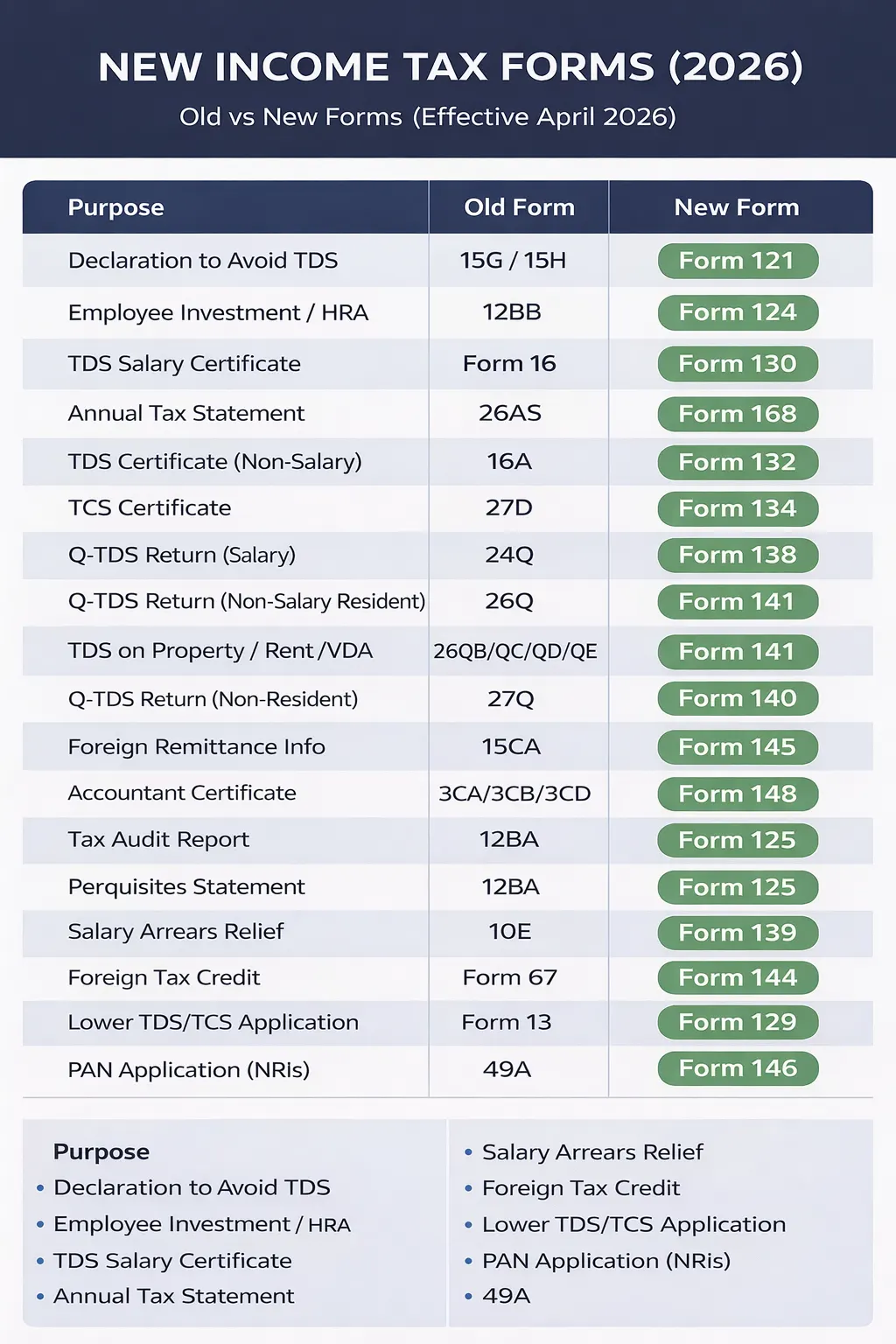
New Income Tax Forms (Effective April 2026)