Budget 2026 Updates
- Time limit to revise Income Tax Returns extended till 31st March (earlier 31st December).
- A nominal fee will apply for revisions after the original deadline.
-
ITR filing due dates clarified:
- ITR-1 and ITR-2 → 31st July
- Non-audit business cases and trusts → 31st August
- Taxpayers are now allowed to update their returns even after reassessment proceedings have started, by paying an additional 10% tax.
Note: These changes will be effective for ITR filing of FY 2026-27.
What is Business Income?
Business income refers to profits or gains earned by a taxpayer from carrying on a trade, commerce, or manufacturing activity. Suppose you run a business (sole proprietorship, partnership, LLP, or company) or earn income from a profession. In that case, that income falls under the “profits and gains of business or profession” head for tax purposes.
For example, if you sell goods, provide services, or operate a manufacturing unit, the net income (after allowable deductions) is your business income. It’s important because this income falls into a particular category in the tax return, influences audit requirements, bookkeeping obligations, and the ITR form you must use.
Selecting the correct ITR form is critical. Here’s a guide:
The website of the Income Tax Department also highlights that filing the wrong form may lead to your return being considered defective.
Who Needs to File a Business Income Tax Return?
Any business entity or person who earns income from business or profession must file a return of income. Here are the typical cases:
- A sole proprietor who runs a business and shows profits or losses must file.
- An individual or HUF carrying on a business or profession and maintaining books of accounts or liable to audit must file (using ITR-3).
- A taxpayer who opts for presumptive taxation under Section 44AD/44ADA/44AE can file ITR-4, provided eligibility conditions are met.
- Partnership firms, LLPs, and companies — regardless of profit or loss — must file their returns (e.g., ITR-5 for firms).
For smooth preparation and filing of your business income return, you will need:
- Bank statements and cash book / pass-book.
- Profit & Loss account and Balance Sheet (if books are maintained).
- Details of turnover/gross receipts and expenses.
- TDS certificates, Form 26AS, and AIS (Annual Information Statement).
- Advance tax or self-assessment tax paid receipts.
- For presumptive taxation: proof of turnover and eligibility under Section 44AD/44ADA/44AE.
- Ledger of depreciation, assets schedule, and audit report, if applicable (for audit cases).
- Any other tax documents, such as Form 16A, rent receipts, etc.
Here is a summary table linking business type with applicable ITR form:
| Business Type |
Applicable ITR Form |
Notes |
| Individual/HUF with business income + books |
ITR-3 |
Maintains books, may be audit liable. |
| Individual/HUF opting for the presumptive scheme |
ITR-4 (Sugam) |
Turnover and receipts must satisfy Section 44AD/44ADA/44AE. |
| Partnership firm/LLP |
ITR-5 |
Separate legal entity; must file even for losses. |
| Company |
ITR-6 |
Domestic company, unless exempt under section 11. |
How to File ITR for Businesses?
Here’s a step-by-step process:
- Gather your documents and compute income: Prepare your financials — turnover, expenses, profits or losses.
- Choose the correct form: Based on business type, turnover, and whether you opted for presumptive taxation.
- Login to the e-filing portal of the Income Tax Department. Select assessment year, form type, and upload/enter required details.
- Fill in the form: Provide personal/business information, income details, deductions, tax paid and tax payable.
- Validate and submit: Preview entries, check for errors, submit.
- Verify the return: Verify your return within 30 days using Aadhaar OTP/EVC/DSC. If not verified within 30 days, the return is treated as not filed.
- Keep records: Even after filing, retain your financial records as the tax department may ask for proof.
Old vs New Tax Regime for Business Income
If you earn business or professional income, you can choose between the old tax regime and the new tax regime while filing your income tax return. Both regimes calculate tax differently.
- Old tax regime allows many deductions and exemptions, but tax rates are higher.
- New tax regime has lower tax rates, but most deductions and exemptions are not allowed.
| Basis |
Old Tax Regime |
New Tax Regime |
| Tax rates |
Higher tax rates |
Lower tax rates |
| Deductions & exemptions |
Allowed (like 80C, 80D, depreciation, etc.) |
Mostly not allowed |
| Tax calculation |
More detailed and complex |
Simple and straightforward |
| Suitable for |
Taxpayers with high deductions |
Taxpayers with few or no deductions |
| Default regime |
No |
Yes (from FY 2023-24 onwards) |
| Switching rules (for business income) |
Can be chosen, but limited switches allowed |
Once opted, switching back is restricted |
Confused which ITR form to file for your business income? Here’s when you must use which ITR form -
-
Step 1: Check if you are using presumptive taxation under Section 44AD, 44ADA, or 44AE
- If yes, you may be eligible for ITR-4
- If no, you must file ITR-3
-
Step 2: Check your total income
- If income is up to ₹50 lakh, continue
- If income is more than ₹50 lakh, file ITR-3
-
Step 3: Check your residential status and type of taxpayer
- You must be a Resident Individual, HUF, or Firm (not LLP)
- If not, file ITR-3
-
Step 4: Check your income details
- Only one house property
- No foreign income or foreign assets
- Not a company director
- No unlisted shares
- If all the above are true, file ITR-4 (Sugam).
Otherwise, file ITR-3.
Penalty for Late Filing of Business Return
Filing your return after the due date comes with risks. Some of the key consequences include:
- Penalty under Section 234F: A late filing fee up to ₹5,000 (may be lower depending on income).
- Loss of benefit: If you file late, you may lose the right to carry forward losses from your business or profession.
- Interest on tax liability: If tax is unpaid or underpaid, interest under Sections 234A, 234B, and 234C may apply.
- Return may be treated as defective: Choosing the wrong form or late filing could lead to your return being treated as defective, which complicates matters further.
Filing the correct ITR form for your business income is crucial to staying compliant, avoiding penalties, and building financial credibility. Whether you run a small proprietorship or a growing company, understanding which form applies to you—and keeping your financial records organized—can make the process hassle-free.
Confused about which ITR form is applicable for business return filing? Tax2win's expert Chartered Accountants can help you file your ITR accurately and hassle-free, ensuring peace of mind. Simply book an eCA from Tax2win!
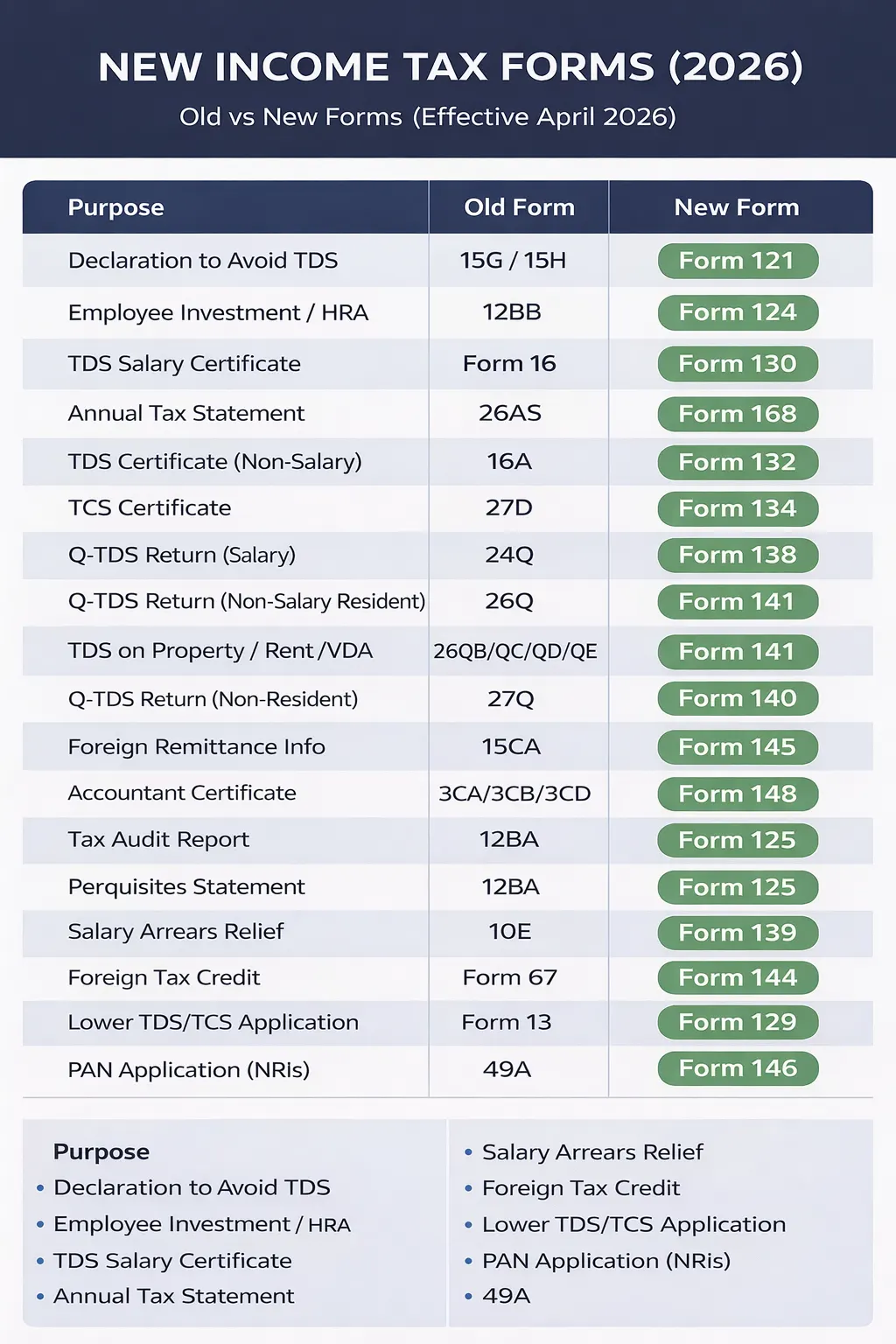
New Income Tax Forms (Effective April 2026)