- Form 16: Meaning, Download & Importance for ITR Filing
- Form 26QB: TDS on Purchase of Immovable Property
- Form 26AS - View And Download Form 26AS Online
- Form 15G, Form 15H to Save TDS on Interest Income
- Form 10-IE: Opting for the New Income Tax Regime
- Form 27Q - TDS Return for NRI Payments, Due Dates
- What is Form 16B? - TDS Certificate for Sale of Property
- Form 16A: How to Get and Fill Form 16A?
- Form 13 for TDS: Lower or Nil Deduction Certificate Explained
- Form 16 Password - What is the Password for TDS Form 16 and How to Open Form 16 Password?
- Form 24Q: TDS Return on Salary Payment
ITR 1 vs ITR 2 - Key Differences, Meaning and Applicability
It is important to select the correct ITR form to avoid notices and penalties from the Income Tax Department. Among the most common forms for individuals are ITR-1 (SAHAJ) and ITR-2, each designed for different income profiles and financial situations.
While ITR-1 caters to salaried individuals with simple income sources, ITR-2 is meant for those with multiple properties, capital gains, or foreign income/assets. This guide breaks down their meanings, applicability, key differences between ITR-1 and ITR-2, and benefits, helping you choose the correct form and file your return smoothly.
Budget 2026 Updates
- Time limit to revise Income Tax Returns extended till 31st March (earlier 31st December).
- A nominal fee will apply for revisions after the original deadline.
-
ITR filing due dates clarified:
- ITR-1 and ITR-2 → 31st July
- Non-audit business cases and trusts → 31st August
- Taxpayers are now allowed to update their returns even after reassessment proceedings have started, by paying an additional 10% tax.
Note: These changes will be effective for ITR filing of FY 2026-27.
What is ITR-1 and its Applicability?
ITR-1, also known as SAHAJ, is the simplest and easiest ITR form and is best suited for salaried individuals. It can be filed by individuals having salary income, income from one house property, and agriculture income (not exceeding Rs. 5,000), and long-term capital gains not exceeding Rs. 1.25 lakhs and total income not exceeding Rs. 50 lakhs.
This form is applicable to those individuals who fulfill the following conditions -
If you have income from these sources:
- Salary or Pension
- One House Property
- Agricultural Income (not exceeding Rs. 5000)
- LTCG u/s 112A, if it does not exceed Rs. 1.25 lakhs.
- If there are no brought forward or carry forward losses.
- Income from other sources
- If the assessee does not own any property outside India
- The taxpayer should not have foreign income.
Who is Not Eligible for Filing ITR-1?
Taxpayers are not eligible to file ITR-1 in the following cases -
- A Non-resident or Resident but Not Ordinarily Resident taxpayer.
- Has a total income exceeding Rs. 50 lakhs.
- If you have income from more than one house property.
- Earns income from a profession or business.
- Receives income from other sources, such as lotteries, gambling, horse racing, or card games.
- Has incurred losses under the “Income from Other Sources” category.
- Has short-term capital gains, long-term capital gains under Section 112A exceeding ₹1.25 lakhs, long-term capital gains under other provisions, or brought forward/carry forward losses.
- Has agricultural income exceeding ₹5,000.
- Has invested in unlisted equity shares.
- Serves as a director in a company.
- Has deferred income tax on ESOPs received from an eligible start-up employer.
Key Components of ITR-1
ITR-1 consists of the following sections, requiring specific details from the taxpayer:
- Part A – General Information: Name, PAN, Aadhaar number, address, and contact details.
- Schedule S – Salary/Pension Income: Details of income from salary or pension.
- Schedule HP – House Property: Information on income from house property.
- Schedule OS – Other Sources: Income from other sources.
- Schedule 80G – Donations: Details of donations eligible for deduction under Section 80G.
- Schedule VI-A – Deductions: Deductions under Chapter VI-A (e.g., Sections 80C, 80D, 80G, etc.).
- Schedule IT – Tax Payments: Details of advance tax and self-assessment tax paid.
- Schedule TDS – Tax Deducted at Source: Details of TDS from salary and non-salary sources.
Benefits of Choosing ITR-1
Given below are the benefits of choosing ITR-1:
- Simplicity: Straightforward format makes it easy to understand and less intimidating for taxpayers.
- Faster Processing: Simple structure enables quicker tax processing and faster refunds.
- Convenience: Can be filed online easily, ideal for individuals with simple financial situations.
- Fewer Mistakes: Reduced chances of errors and discrepancies, helping avoid queries from the Income Tax Department.
What is ITR-2 and its Applicability?
ITR-2 is for individuals and Hindu Undivided Families (HUFs) who do not have income from business or profession. It covers a broader range of income sources compared to ITR-1.
It is applicable to:
- Salaried resident individuals.
- Hindu Undivided Families (HUFs).
- Non-Resident individuals.
Taxpayers eligible to file ITR-2 include:
- Those not eligible to file ITR-1 (SAHAJ).
-
Income from the following sources:
- Salary/Pension.
- More than one house property.
- Capital gains exceeding Rs. 1.25 lakhs, and if there are any carried forward losses.
- Other sources include horse racing, card games, lotteries, gambling, etc.
- Brought forward losses from previous years.
- Agricultural income exceeding ₹5,000 in a financial year.
- Taxable income exceeding ₹50 lakhs.
- Ownership of property or assets abroad.
- Foreign income or income from outside India.
- Claiming DTAA benefits or relief under Section 90/91.
- Investment in unlisted equity shares.
- Director in a company.
- Deferred income tax on ESOPs received from an eligible start-up employer.
Who is Not Eligible for Filing ITR-2?
An individual or HUF is not eligible to file ITR-2 in the following cases:
- Has income from business or profession.
- Is a company, firm, or trust (these entities cannot file ITR-1 or ITR-2).
Key Components of ITR-2
ITR-2 includes various parts and schedules to capture detailed information from the taxpayer:
- Part A – General Information: Basic taxpayer details.
- Schedule S: Income from salary or pension.
- Schedule HP: Income from house property.
- Schedule CG: Income from capital gains.
- Schedule OS: Income from other sources.
- Schedule CYLA: Statement of income after setting off current year losses.
- Schedule BFLA: Statement of income after setting off brought forward losses from previous years.
- Schedule CFL: Details of losses to be carried forward to future years.
- Schedule VI-A: Deductions under Chapter VI-A.
- Schedule SPI: Income of specified persons (spouse, minor child, etc.) should be included in the taxpayer’s income.
- Schedule SI: Income chargeable to tax at special rates.
- Schedule EI: Details of exempt income.
- Schedule FSI: Income earned outside India and related tax relief.
- Schedule TR: Details of tax paid outside India.
- Schedule FA: Details of foreign assets and income from any source outside India.
Benefits of Choosing ITR-2
Given below are the advantages of Filing ITR-2:
- Detailed Disclosure: Allows comprehensive reporting of income from multiple sources, ideal for taxpayers with complex portfolios.
- Tax Optimization: Enables accurate claims of deductions and exemptions for different income types, helping optimize tax liability.
- Avoidance of Legal Issues: Timely and correct filing helps prevent penalties, especially for non-disclosure of income and assets, including those from foreign sources.
- Facilitates Refunds: Ensures smooth processing of tax refunds and enables claims for excess TDS deductions.
- Improves Financial Credibility: Properly filed returns enhance eligibility for loans and other financial products by strengthening financial records.
What is the Difference Between ITR-1 and ITR-2?
ITR-1 and ITR-2 are significantly different in nature. Given below are the differences between ITR-1 and ITR-2:
| Particulars | ITR-1 | ITR-2 |
|---|---|---|
| Filed By | Resident individuals with income upto Rs. 50 lakhs. | Individuals and HUF not carrying on business or profession under proprietorship. |
| Individuals having income from salary, one house property, agricultural income upto Rs. 5,000, other sources (except winnings from lottery, horse racing, online gaming, etc.) | It is applicable in cases of capital gains, foreign income/asset, more than one house property, and agricultural income upto Rs. 5000. | |
| Individuals having no foreign assets and no foreign income. | ||
| Types of Income | Types of Income Covered in ITR-1 | Types of Income Covered in ITR-2 |
| Income from salary or pension. | Income from salary or pension. | |
| Income from one house property. | Income from more than one house property. | |
| Income from other sources (including interest income). | Income from capital gains. | |
| Agricultural income up to ₹5,000. | Foreign income and/or ownership of foreign assets. | |
| Agricultural income up to ₹5,000. | ||
| Deductions and Exemptions | Deductions and Exemptions in ITR-1 | Deductions and Exemptions in ITR-2 |
| Standard deduction from salary. | All deductions available under ITR-1. | |
| Deductions under Sections 80C to 80U. | Relief for payment of foreign tax under Sections 90, 90A, and 91. | |
| Exemption on house property income under Section 24. | ||
| Documents | Documents Required | Documents Required for ITR-2 |
| Basic personal information. | All documents required for filing ITR-1. | |
| Form 16 from the employer. | Details of foreign assets and foreign-sourced income. | |
| Bank interest statements. | Capital gains reports. | |
| Proof of investments for claiming deductions. | Multiple Form 16, if applicable. | |
| Rent receipts for more than one house property. | ||
| Filing Process | The process is simple, aided by pre-filled data available on the e-filing portal. | The process is more detailed and complex due to multiple income types and extensive disclosures, especially for foreign income and assets, and multiple properties. |
Which ITR Form to Choose ITR-1 or ITR-2?
Whether you should use ITR-1 or ITR-2 form depends on various factors and subject ot fulfilling different conditions. Given below are the different forms you need to choose from -
- Another factor that influences whether you should choose ITR 1 or ITR 2 is the complexity of your financial profile.
- Start by listing all your sources of income. If your income comes from a salary, a house property, and other simple sources, ITR 1 is suitable. However, if you earn from multiple sources such as capital gains or foreign income, you should opt for ITR 2.
- Check your residential status. Non-resident Indians and resident individuals with foreign assets or income must file ITR 2.
- Review your agricultural income. If it exceeds ₹5,000, you cannot use ITR 1 and must switch to ITR 2.
- Finally, assess whether you need to make detailed disclosures. If you have foreign assets, multiple house properties, or other complex financial details to report, ITR 2 is the right choice.
Common mistakes to avoid while choosing ITR-1 vs ITR-2
Choosing the wrong ITR form is a common mistake and can lead to a defective return, delayed refund, or income tax notice. Below are some common errors taxpayers make while deciding between ITR-1 and ITR-2, and how to avoid them.
1. Filing ITR-1 despite having capital gains
Many taxpayers select ITR-1 even when they have capital gains. ITR-1 allows only limited long-term capital gains on equity under section 112A.
If you have short-term capital gains, property sale gains, or higher long-term capital gains, you must file ITR-2.
2. Ignoring loss set-off or carry-forward
ITR-1 does not allow set-off or carry-forward of capital losses.
If you have capital losses that you want to adjust or carry forward to future years, filing ITR-1 will result in loss of this benefit. In such cases, ITR-2 is mandatory.
3. NRIs or RNORs filing ITR-1
ITR-1 is meant only for resident individuals.
If your residential status is NRI or RNOR, you cannot file ITR-1, even if your income is simple. You must file ITR-2.
4. Not reporting foreign income or foreign assets
Taxpayers often miss the fact that any foreign income or foreign asset requires disclosure under Schedule FA.
ITR-1 does not support this reporting. If you have foreign income or assets, ITR-2 must be used.
5. Being a company director or holding unlisted shares
If you were a director in a company or held unlisted equity shares at any time during the year, you cannot file ITR-1.
Such taxpayers are required to file ITR-2, even if there is no capital gain.
6. Missing DTAA relief under sections 90 or 91
If you have paid tax outside India and want to claim DTAA relief, this can be done only through ITR-2.
Filing ITR-1 in such cases may result in paying higher tax than required.
7. Choosing ITR-1 only because income is below ₹50 lakh
Income limit alone is not enough to decide the ITR form.
Even if your income is below ₹50 lakh, factors like capital gains, foreign income, multiple house properties, or NRI status may still require ITR-2.
8. Relying only on pre-filled data
Pre-filled data does not decide the correct ITR form.
You should always check AIS, Form 26AS, and your actual income sources before choosing between ITR-1 and ITR-2.
When deciding between ITR-1 and ITR-2, many taxpayers make avoidable errors that can lead to defective returns, processing delays, notices from the Income Tax Department, or even loss of refunds. The key mistakes to watch out for include:
In order to avoid income tax notices, it is important to choose the correct ITR form while filing. Tax2win’s AI-powered self-filing software automatically selects the appropriate ITR form based on your income sources. Not just this, it also provides you with a comparison between your tax liability in the old and the new regime, so that you can select the most beneficial one. With Tax2win’s self-filing software, you can file your ITR in just 4 minutes.
And if you are someone who finds taxes complicated, don’t worry! Our CAs are here to assist you every step of the way. Simply book an eCA from Tax2win and get your ITR filed seamlessly and accurately. Book an Online CA Now!
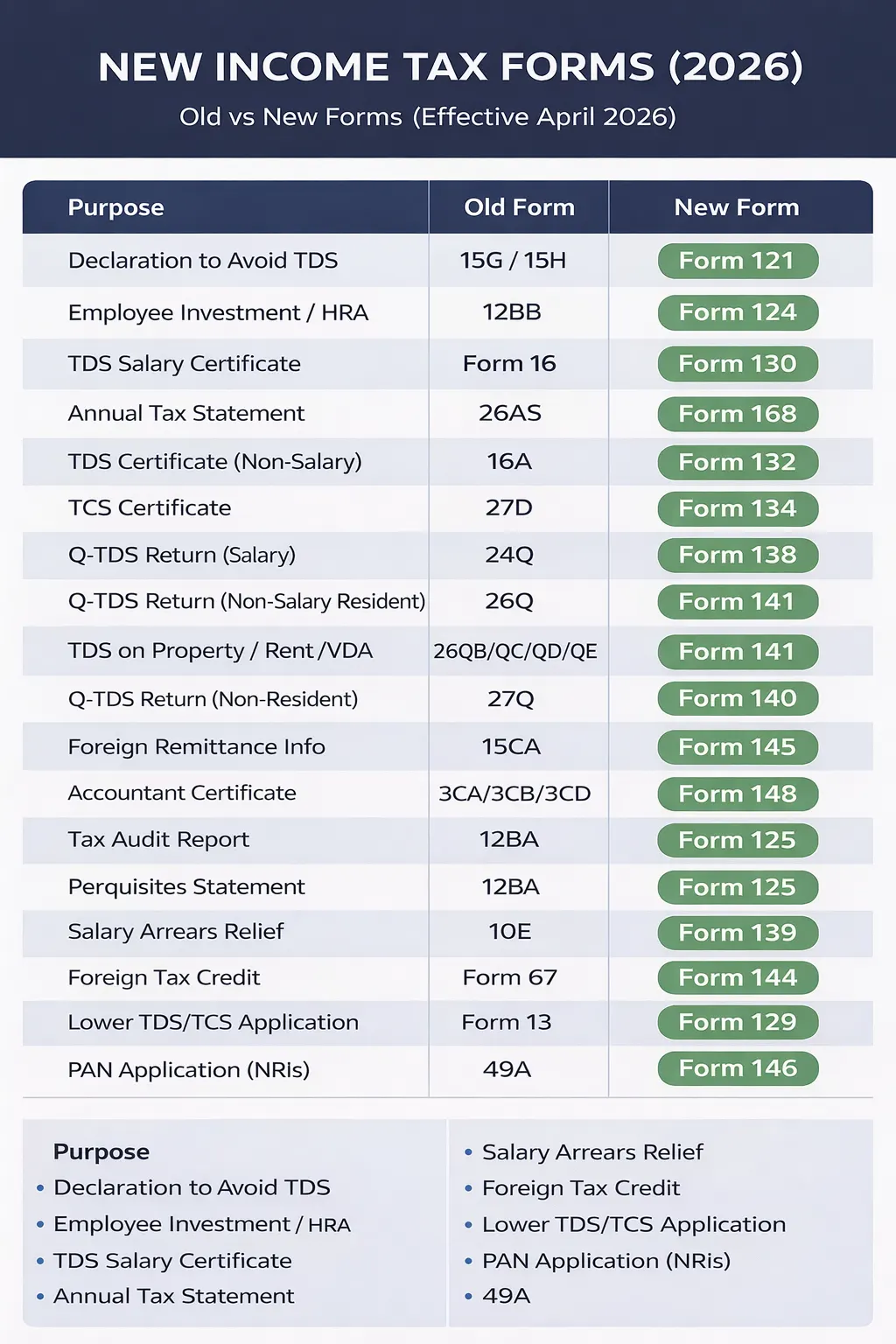
New Income Tax Forms (Effective April 2026)

Frequently Asked Questions
Q- What is ITR 1?
ITR 1, or SAHAJ, is for Indian residents whose income includes:
- Salary or pension
- One house property
- Other sources (like interest)
- Agricultural income up to ₹5,000
Q- What is ITR 2?
ITR 2 is for individuals and Hindu Undivided Families (HUFs) with:
- No income from business/profession
- More than one house property
- Capital gains
- Foreign income or assets
- Agricultural income above ₹5,000
Q- Who should file ITR 1?
Resident individuals with income up to ₹50 lakh from:
- Salary/pension
- One house property
- Other sources (interest, etc.)
- Agricultural income up to ₹5,000
Q- Who can file ITR 2?
Individuals or HUFs without business income but with:
- Capital gains
- Foreign income/assets
- More than one house property
- Agricultural income above ₹5,000
Q- Are NRIs eligible for ITR 1?
No. NRIs are not eligible for ITR-1. They must file ITR-2 or another relevant form.
Q- What are the main differences in income types?
- ITR 1: Salary/pension, one house property, other sources (except lottery/race horses), agricultural income up to ₹5,000
- ITR 2: Multiple houses, capital gains, foreign income/assets, agricultural income above ₹5,000
Q- Can I switch from ITR 1 to ITR 2 if my income changes?
Yes. File ITR 2 or the relevant form if your income profile changes mid-year.
Q- What if I file the wrong form?
Your return may be processed incorrectly, rejected, or attract penalties. You may need to file a revised return before the deadline.
Q- Do I need to attach documents?
No. But keep all documents ready for verification if needed.
Q- Can a salaried person use ITR 2 instead of ITR 1?
Yes, if they have multiple income sources like multiple properties and If income matches ITR 1 criteria, use ITR 1.