Before jumping into Form 130, it helps to recall what Form 16 actually does.
Every year, your employer:
- Calculates your total salary
- Deducts tax (TDS) from your income
- Deposits that tax with the government
Form 16 is simply proof of all this.
It tells you:
- How much you earned
- How much tax was deducted
- How your tax was calculated
You use this document to file your ITR easily without recomputing everything from scratch.
Form 130 is the new TDS certificate for salaried individuals.
It will be issued by your employer and will contain:
- Your salary details
- Tax deducted (TDS)
- Tax deposited with the government
In short:
Form 130 = Form 16, just with a new name and improved format
The government is revamping the entire income tax system under the new Income-tax Act (proposed).
The goal is to:
- Simplify form numbering
- Make tax documents more structured
- Improve data matching and transparency
This is more of a system upgrade, not a tax change.
- Applicable from: FY 2026–27
- First issued: Around May 2027
So:
- For FY 2025–26 → you’ll still get Form 16
- For FY 2026–27 → you’ll get Form 130
More Detailed Salary Breakdown
In Form 16, sometimes salary details feel compressed or unclear.
Form 130 is expected to expand this, including:
- Clear component-wise salary
- Better reporting of allowances
- Detailed perquisite disclosures
This helps you understand exactly how your taxable income is derived
Better Tax Computation Visibility
Instead of just showing final numbers, Form 130 will likely:
- Show step-by-step tax calculation
- Clearly reflect deductions (80C, 80D, etc.)
- Improve readability
This reduces dependency on external calculators
Stronger Linking with Tax Systems
One of the biggest issues today:
- Mismatch between Form 16, AIS, and 26AS
Form 130 is designed to:
- Align better with AIS (Annual Information Statement)
- Reduce discrepancies
- Minimise chances of notices
Introduction of Tracking Mechanisms
There are proposals to include:
- Identification numbers for proofs submitted (like investments, deductions)
Why this matters:
- Prevents fake claims
- Improves audit trail
- Makes compliance tighter but cleaner
Possible Expanded Scope
In certain cases, Form 130 may also include:
- Pension income
- Interest income (especially for senior citizens)
This could reduce the need to refer to multiple documents
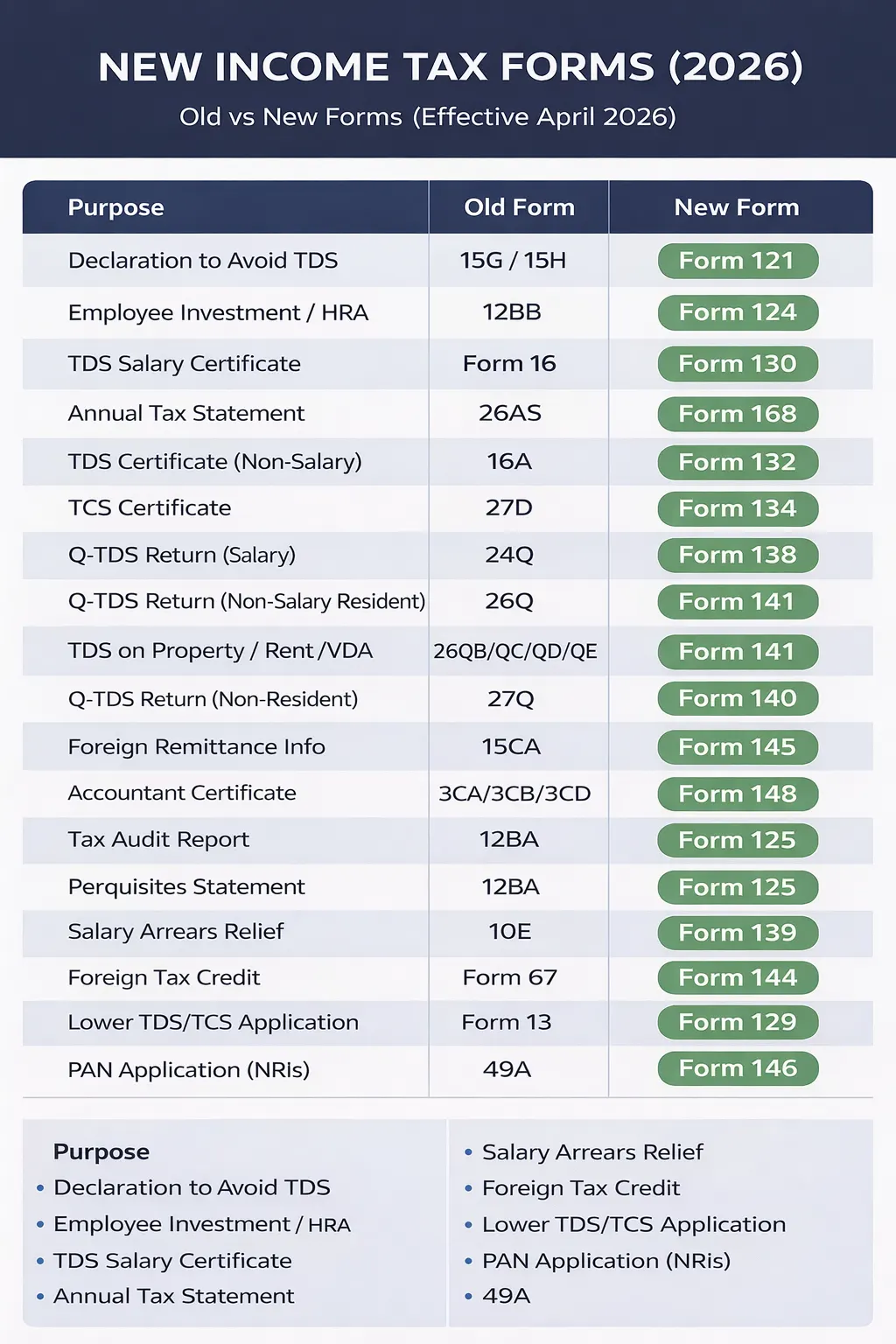
Old vs New Forms (Quick Comparison)
What Will Stay the Same?
- You’ll still get the form from your employer
- You’ll still use it to file your ITR
- The issue deadline (around May) remains
- Filing process remains unchanged
What Should You Do as a Taxpayer?
No major action needed, but keep these in mind while filing ITR next season i.e. FY 2026-27:
- Don’t panic when you don’t see Form 16
- Look for Form 130 instead
-
Check:
- PAN details
- Salary figures
- TDS amount
- Match it with AIS before filing
From 2026 onwards, your Form 16 will simply be called Form 130—only better organised.