What is a Revised Income Tax Return?
A revised return, also known as a revised income tax return, is filed under Section 139(5) of the Income Tax Act to correct errors or omissions in an already filed ITR. Taxpayers can use a revised return to update incorrect income details, deductions, or other information to ensure accurate tax filing and avoid notices or penalties.
Filing income tax returns can sometimes be complex and prone to errors. Section 139 (5) of the Income Tax Act of 1961, i.e., Revised Return, allows taxpayers to correct the discrepancies in their IT returns, should there be any unintentional errors or omissions, even after receiving a tax notice.
When is it Necessary to File a Revised Return?
Taxpayers can file a revised Income Tax Return (ITR) to correct mistakes or omissions made in their original return. This is allowed under Section 139(5) of the Income Tax Act, 1961. Here are some of the most common reasons why someone might file a revised return:
Correction of Errors:
If you realize that you have made an error or omission in your original ITR, such as reporting incorrect income while income tax efiling, deductions, or any other information, you can file a Revised Return to correct those errors. This allows you to provide accurate and updated information to the tax authorities.
Missed Reporting:
If you inadvertently omitted certain income sources or failed to include certain deductions or exemptions in your original ITR, you can file a Revised Return to include those missed details. This helps ensure that your tax assessment is based on complete and accurate information.
Changes in Tax Calculation:
If there are changes in the tax laws, rules, or tax rates that affect your tax liability after you have filed your original ITR, you can file a Revised Return to incorporate those changes in your tax calculation. This allows you to adjust your tax liability accordingly.
Other Situations:
- Change in Residential Status: Shifting from resident to non-resident or vice versa after initial filing.
- Correction of Assessment by Tax Department: Addressing discrepancies raised by the income tax authorities in their assessment.
- Claiming Refund Due: Realizing you're eligible for a refund after the original filing due to overpaid taxes.
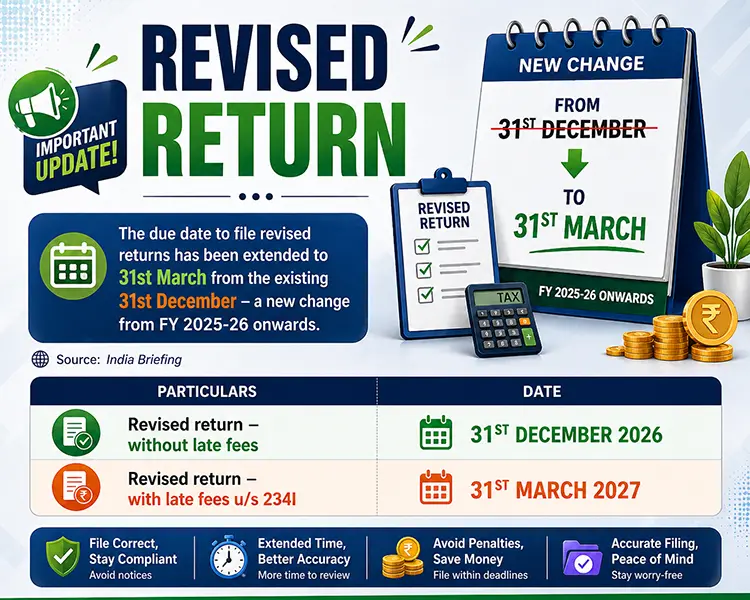
Revised Return Last Date (Updated)
You can revise your return:
Up to 12 months from the end of the assessment year
Example:
For AY 2025–26 → Last date = 31 March 2027
Late Fee on Revised Return
If you revise your return after 9 months, a fee may apply:
| Income Level |
Late Fee |
| Up to ₹5 lakh |
Up to ₹1,000 |
| Above ₹5 lakh |
Up to ₹5,000 |
Revising early helps you avoid additional charges
Who Can File a Revised Return?
Any taxpayer who has filed an original income tax return under Section 139(1) of the Income Tax Act, 1961, can file a revised income tax return under Section 139(5) of income tax act. This applies to:
- Individuals
- Businesses (including companies, partnerships, and Hindu Undivided Families)
If you filed an original or even a belated return (filed after the due date but before assessment is complete), you are eligible to revise it under Section 139(5) of Income Tax Act to rectify any errors or omissions.
Steps to File Revised Return under Section 139(5)
-
Step 1: Either sign in to the tax2win website using your existing credentials or sign up to the portal and create an account. You can do self-filing only in the case of income from salary, business, and capital gains.
-
Step 2: After logging in, a table consisting of all the possible sources of income opens. You need to select the income sources that you have. Based on your sources of income, Tax2win’s DIY ITR filing system selects the applicable ITR form automatically.
-
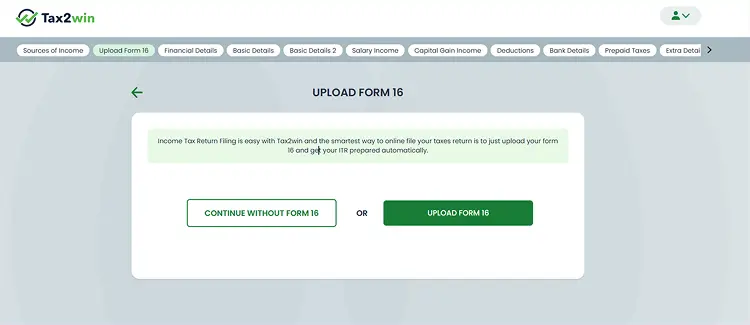
Step 3. You need to upload Form 16. In case you don’t have Form 16, you can simply skip the option and proceed further.
-
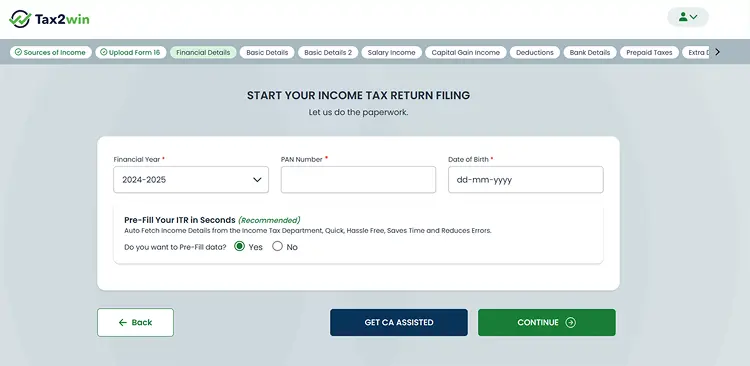
Step 4. Select the F.Y. and enter the PAN Details and DOB. (If you don’t have a registered account with the Income Tax Department, you will receive an OTP, and a new account will be created.). You can also choose if you want our DIY software to fetch your personal details and get data pre-filled.
-
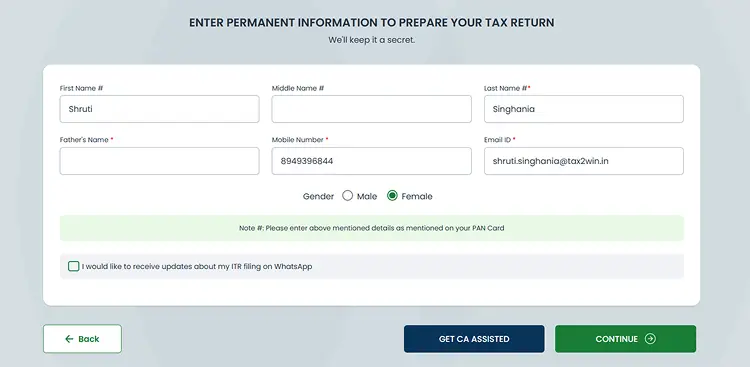
Step 5: Enter a few basic details in the next step. Some of it is pre-filled from the Income Tax Department’s database. Remember to cross-check the information available. As shown in the image given below, you have to enter your personal details like name, email ID, date of birth, father’s name, gender, etc.
-
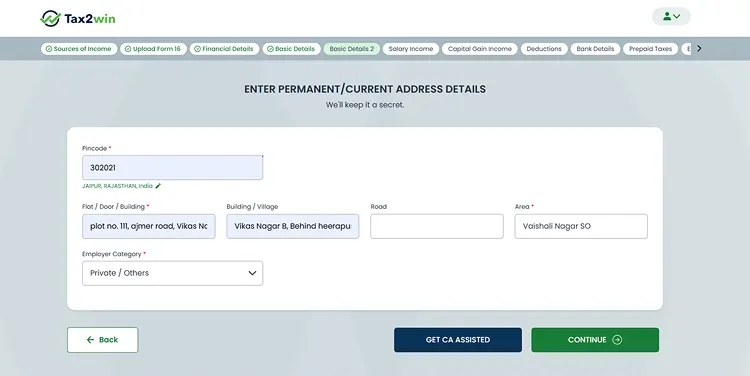
Step 6: In the next step, you have to provide your address details and employer category. You can refer to the image below to understand this better.
-
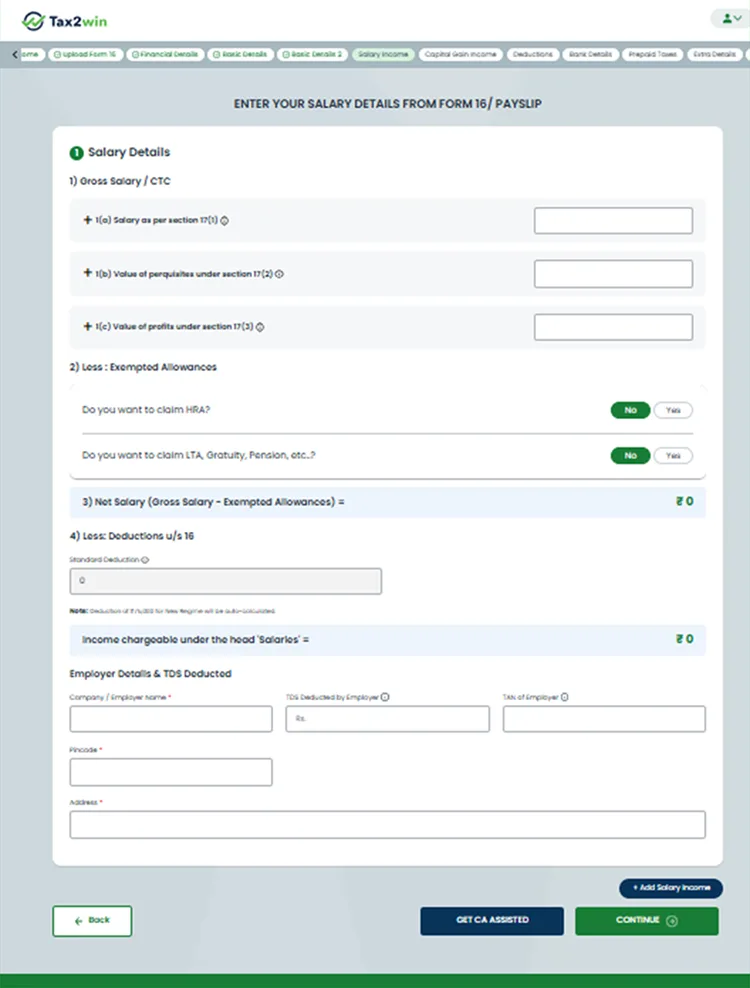
Step 7: In the next step, you have to fill in your employment details. The standard deduction is applied automatically in the case of salaried employees. As shown in the image below, you have to enter your gross salary/CTC, exempted allowances like HRA, LTA, gratuity, net salary, and standard deduction and professional tax under section 16. Note that if you have uploaded Form 16, your employment data will be pre-filled in the ITR Form. All you have to do is verify the information and proceed to file ITR.
-
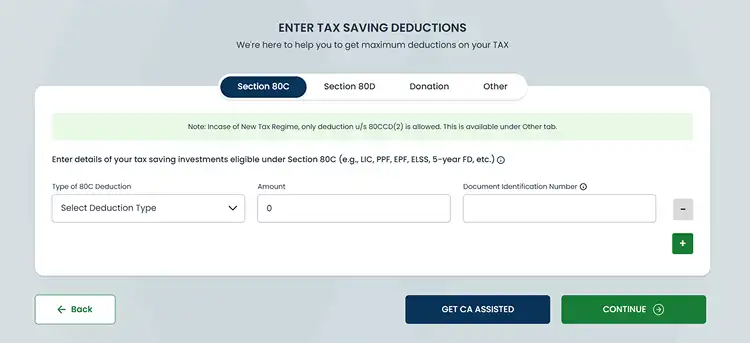
Step 8: Enter the details of the investment made during the year to calculate the applicable deductions. First, select the deduction type that you want to claim from the dropdown and enter the details of that deduction. You have to enter details of investments in PPF, LIC, PF, housing loan, FDR, NSC, tuition fees, premiums paid to the annuity, and other 80C deductions.
-
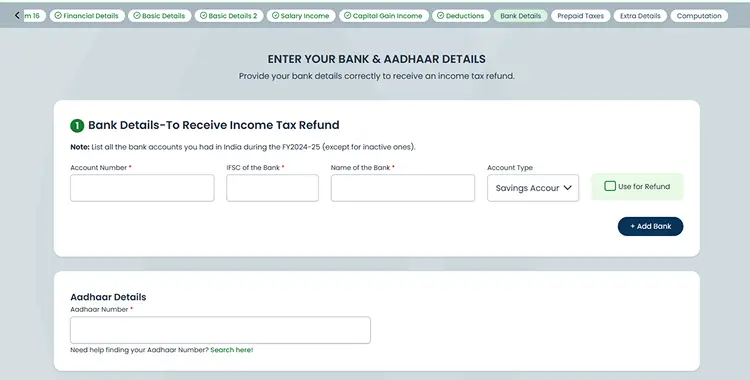
Step 9: In this step, you are required to enter your bank details. Enter your IFSC code, name of the bank, account number, and Aadhaar details. As per government law, it is mandatory to show all the bank details. You can select one account as the primary account. Remember, you will get a TDS refund in your primary bank account.
-
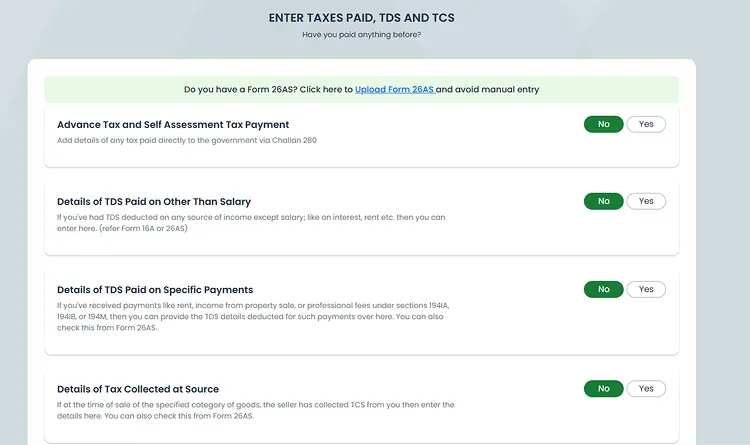
Step 10: In this step, you have to upload Form 26AS, and your TDS details will be auto-populated. If you don’t have Form 26AS, you can skip it and fill in the details manually before e-filing your ITR. If you have paid the tax, select yes on Advance Tax and any tax paid on other income sources, enter the details from the receipt generated, and click on Continue.
-
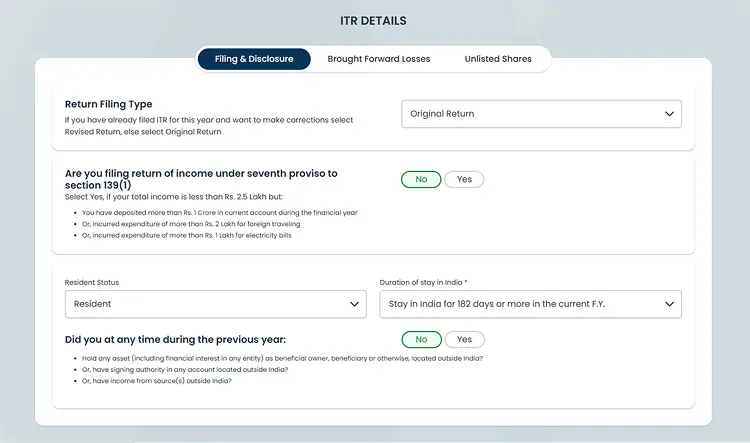
Step 11: Select ‘Revised Return” under the return filing type and enter the acknowledgment number of the original return. If your income is less than Rs.2.5 lakhs and electricity expenses during the year are less than 1 lakh, select yes on the option ‘Are you filing return under the seventh proviso to section 139(1). Also, select the number of days for which you have stayed in India in the relevant FY. The system will automatically determine your residential status. Select whether you have any foreign assets/income during the previous year.
-
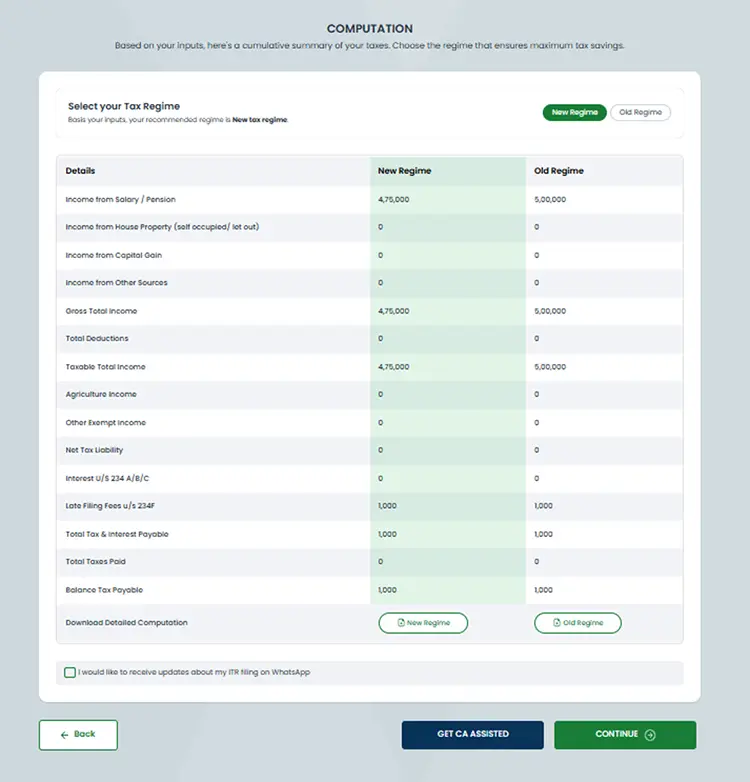
Step 13: Based on the information given by you in the previous sections, the software automatically computes your tax liability using both the old and the new regime. You can compare both regimes and select the one that is more beneficial for you. Remember to cross-check all the information in return, click on the checkbox, and click on “File my return.”
-
Step 14: Remember to cross-check all the information in return, click on the checkbox, and click on “File my return.”
What Happens When You File a Revised Income Tax Return?
If there are minor changes in your revised return, like a change of bank account details, personal details, etc., there would be no consequences for filing a revised return. However, in case of undeclared income or other important rectification done on the revised return, the tax department might pick up the change and the tax filed in the earlier return might be scrutinized.
Note: If the revision reveals higher taxable income, you might owe additional tax, potentially with interest.
Things to Keep in Mind when Filing a Revised Income Tax Return
If you are filing a revised income tax return, here are the things that you should remember –
Revised Return Replaces the Original ITR
A revised income tax return completely replaces the original return. Once you file the revised return, the Income Tax Department treats it as your final ITR.
Filing a Revised Return After Refund
You can file a revised return even if your original ITR has been processed and you have already received a refund, provided you file it within the prescribed time limit.
Changing the ITR Form
If you selected the wrong ITR form while filing the original return, you can correct it by filing a revised income tax return.
No Limit on Revisions
There is no restriction on the number of times you can revise your income tax return, as long as you do so within the allowed timeframe.
Revision Not Allowed After Assessment
If the Assessing Officer completes the assessment under Section 143(3) of the Income Tax Act, you cannot file a revised return.
Switching Tax Regimes in a Revised Return
If you filed your original return under the new tax regime, you can revise it only under the new regime and cannot switch to the old regime.
| Type |
Purpose |
Time Limit |
| Original ITR |
First-time filing |
Due date |
| Revised Return |
Correct mistakes |
12 months |
| Belated Return |
Late filing |
After due date |
| ITR-U |
Update return with additional tax |
Up to 4 years |
With Tax2win’s AI-powered self-filing platform, ITR filing is super easy and takes just 4 minutes. And if you find taxes complicated, simply get in touch with our experts, who can help you with everything, right from tax planning to tax filing. Book an online CA now!